Why Contractors Are Using AI Construction Software to Analyze Project Specifications

The construction industry is experiencing a major digital transformation. As projects become more complex and documentation requirements continue to grow, contractors are looking for smarter ways to analyze plans, specifications, and technical documents. Traditional methods of reviewing construction specifications-often involving manual reading of hundreds or even thousands of pages-are becoming increasingly inefficient.
To solve this challenge, many contractors are adopting AI construction software that can quickly analyze project documentation and help teams locate critical information. By using intelligent technologies, contractors can reduce manual work, improve accuracy during the bidding process, and better understand project requirements.
Tools such as the conTEXT Tool and advanced construction specification software are helping contractors analyze specification documents faster and organize project information more effectively. As a result, construction companies can prepare more accurate bids, reduce project risks, and streamline their preconstruction workflows.
This growing adoption of AI-powered tools is reshaping how construction professionals approach document analysis and specification management.
The Growing Complexity of Construction Specifications
Construction specifications are one of the most important components of any building project. They provide detailed instructions that define how a project should be constructed, including materials, installation methods, quality standards, and performance requirements.
A typical construction project may include a specification manual that contains hundreds or thousands of pages. These documents outline essential project details such as:
Material types and quality standards
Installation procedures
Product performance requirements
Compliance with building codes
Safety guidelines
Contractor responsibilities
Specifications work alongside architectural drawings to define the full scope of a construction project. While drawings illustrate design intent, specifications provide the technical requirements needed to execute the project properly.
However, reviewing these documents manually can be time-consuming. Contractors and estimators must often search through extensive specification manuals to locate relevant sections that apply to their trade or project responsibilities.
As project documentation continues to expand, manual specification analysis is becoming increasingly difficult. This is one of the primary reasons why contractors are turning to AI construction software.
What Is AI Construction Software?
AI construction software refers to digital tools that use artificial intelligence and document intelligence technologies to analyze construction documents, specifications, and project data.
Instead of relying entirely on manual document review, construction teams can use AI-powered tools to process large volumes of information quickly and identify important project details.
AI construction software can assist contractors with several tasks, including:
Analyzing construction specifications
Locating relevant document sections
Identifying scope requirements
Organizing project documentation
Improving bid preparation workflows
By automating parts of the document analysis process, AI software helps construction professionals focus on strategic decision-making rather than spending hours reviewing documents.
For contractors managing multiple projects simultaneously, this efficiency can make a significant difference in productivity.
The Role of Construction Specifications in Building Projects
Construction specifications serve as the technical backbone of any building project. They describe exactly how different components of a project should be constructed and installed.
Specifications typically include detailed instructions covering:
Building materials
Equipment requirements
Construction methods
Quality control standards
Regulatory compliance requirements
For example, a specification section may outline the exact type of concrete mix required for structural elements or specify installation procedures for mechanical systems.
Without clear specifications, contractors may interpret project requirements differently, which can lead to inconsistencies during construction.
Accurate specification analysis is essential during the preconstruction phase because it allows contractors to fully understand project expectations before submitting bids.
However, due to the large size and technical nature of specification manuals, reviewing them manually can be a challenging task.
Challenges of Manual Specification Review
For many contractors, reviewing construction specifications is one of the most time-consuming aspects of project preparation.
Manual document analysis presents several challenges.
Large Document Volumes
Specification manuals for commercial or infrastructure projects can contain hundreds or thousands of pages. Finding relevant information within these documents requires significant time and attention.
Difficulty Locating Key Information
Contractors often need to search through multiple specification sections to locate specific requirements related to materials, installation methods, or trade responsibilities.
Cross-Referencing Drawings and Specifications
Construction documents frequently require contractors to cross-reference drawings with specification sections. This process can be tedious and prone to errors.
Risk of Missing Important Details
When reviewing large volumes of technical documents manually, there is always a risk of overlooking critical requirements.
Missing a specification detail during the bidding phase can lead to unexpected costs or change orders later in the project.
Because of these challenges, many construction companies are now using construction specification software to improve document analysis.
How Construction Specification Software Improves Document Analysis
Construction specification software helps contractors organize and analyze specification documents more efficiently.
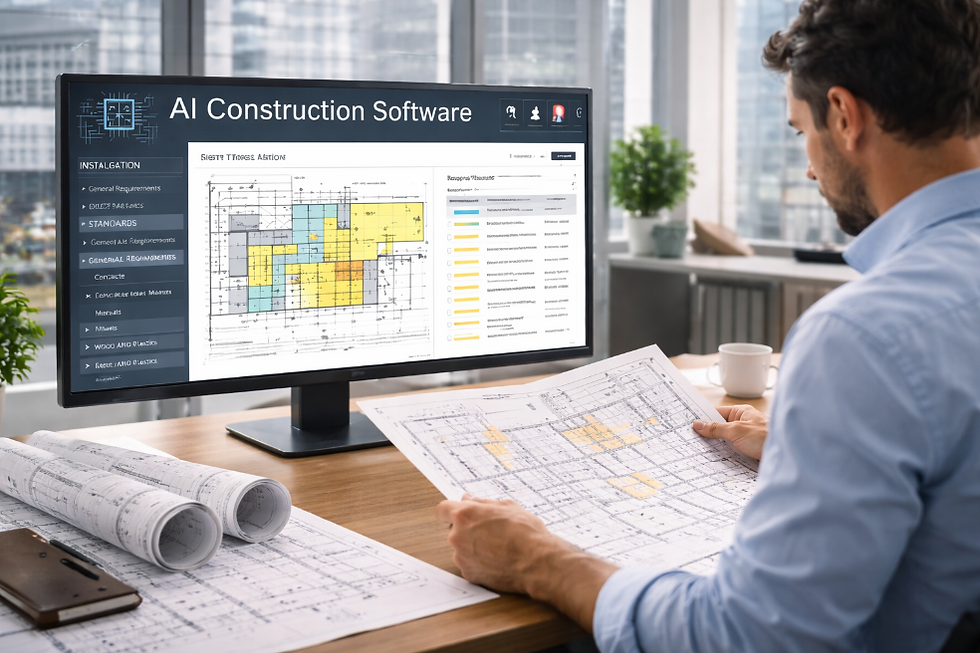
Instead of relying on static PDFs or printed manuals, contractors can use digital platforms that allow them to search, filter, and manage specification information.
Some of the key capabilities of construction specification software include:
Searchable specification documents
Organized document libraries
Easier navigation through specification sections
Improved document accessibility for teams
With digital specification management tools, contractors can locate relevant project requirements much faster.
These platforms also help teams collaborate more effectively by ensuring that everyone is working with the same organized documentation.
However, while traditional specification software improves document management, the addition of AI capabilities takes document analysis to a new level.
How the conTEXT Tool Helps Contractors Analyze Specifications
The conTEXT Tool is designed to help contractors locate important information within construction documents more efficiently.
Instead of manually searching through large specification manuals, contractors can use intelligent tools to identify relevant sections quickly.
By improving document visibility and search capabilities, tools like conTEXT Tool allow construction professionals to:
locate specification sections related to their scope of work
Identify technical requirements faster
Reduce time spent reviewing lengthy documents
Organize project information more effectively
This type of document intelligence is particularly useful during the preconstruction phase when contractors need to analyze project documents quickly in order to prepare competitive bids.
For estimators and preconstruction teams, having faster access to specification details can significantly improve productivity.
Benefits of Using AI Construction Software in Preconstruction
Contractors are increasingly adopting AI construction software because it offers several advantages during the preconstruction stage of a project.
Faster Document Analysis
AI tools can analyze construction documents much faster than manual review processes.
This allows contractors to identify relevant specification sections within seconds rather than spending hours searching through documents.
Improved Bid Accuracy
Understanding project specifications clearly helps contractors prepare more accurate bids.
AI-driven document analysis reduces the likelihood of missing important requirements during the bidding process.
Reduced Human Error
Automation helps minimize the risk of overlooking critical specification details.
This can reduce costly mistakes later in the project.
Better Collaboration Across Teams
Digital document platforms allow multiple team members to access and review project specifications simultaneously.
This improves communication between estimators, project managers, and subcontractors.
Improved Decision-Making
By providing faster insights into project documentation, AI tools allow construction teams to identify potential risks earlier in the project lifecycle.
Who Benefits Most From AI Construction Software?
Several roles within the construction industry can benefit from using AI-powered document analysis tools.
General Contractors
General contractors must review large volumes of project documentation during the bidding process.
AI software helps them analyze specifications more efficiently and ensure that project requirements are fully understood.
Subcontractors
Subcontractors rely on specification documents to understand their responsibilities and installation requirements.
AI tools help them locate relevant information faster.
Estimators
Estimators are responsible for preparing project bids and analyzing construction documents.
AI construction software allows them to review specifications more quickly and accurately.
Preconstruction Managers
Preconstruction managers oversee the entire bidding process.
AI-driven document analysis helps them ensure that project documentation is organized and accessible.
Construction Project Managers
Even after a project is awarded, project managers often need to reference specifications to verify installation requirements and compliance standards.
Real Construction Use Cases for AI Construction Software
The practical benefits of AI construction software become clearer when looking at real-world construction workflows.
Reviewing Specifications During Bid Preparation
Before submitting a bid, contractors must analyze project specifications to understand material requirements, installation procedures, and compliance standards.
AI tools can quickly locate these details within specification documents.
Identifying Scope Requirements
Construction teams can use AI software to identify specification sections related to specific trades or project components.
This helps ensure that scope requirements are properly understood before construction begins.
Coordinating Responsibilities Between Trades
Clear specification analysis helps contractors assign responsibilities between subcontractors more effectively.
This reduces confusion during project execution.
Verifying Installation Standards
Project managers can reference specification documents during construction to ensure that work meets required standards.
AI-powered document search tools make it easier to locate relevant specification sections when needed.
The Future of AI in Construction Document Management
Artificial intelligence is expected to play an increasingly important role in construction technology.
As AI capabilities continue to evolve, construction software may be able to perform tasks such as:
Automatically analyzing construction specifications
Identifying potential scope gaps
Predicting project risks
Assisting with cost estimation
Generating structured project documentation
These capabilities could significantly improve efficiency during the preconstruction phase.
Tools such as the conTEXT Tool demonstrate how AI-driven document intelligence can help construction professionals work more efficiently.
As the industry continues to adopt digital technologies, AI-powered construction software will likely become a standard part of construction workflows.
Choosing the Right AI Construction Software
Contractors considering new technology solutions should evaluate several important factors before adopting AI construction software.
Document Analysis Capabilities
The software should be able to process and analyze construction specifications efficiently.
Ease of Use
Construction teams should be able to use the platform without extensive training.
Collaboration Features
The platform should allow multiple team members to access and review documents easily.
Integration With Existing Workflows
The software should integrate with other construction management tools used by the company.
Scalability
Contractors working on large projects should choose software that can handle extensive document sets and complex project requirements.
Selecting the right technology solution can help construction companies improve efficiency and reduce risks during project planning.
Conclusion
As construction projects continue to grow in complexity, contractors must manage increasing volumes of technical documentation. Reviewing large specification manuals manually is time-consuming and can lead to missed details that affect project outcomes.
This is why many construction companies are turning to AI construction software to streamline specification analysis and improve preconstruction workflows.
By using advanced construction specification software, contractors can analyze project documentation more efficiently, locate important requirements faster, and prepare more accurate bids.
Tools like the conTEXT Tool help construction teams navigate complex specification documents and organize critical project information. Platforms such as Contexo.io are helping bring these capabilities together by providing intelligent tools designed to simplify construction document analysis and improve project preparation.
As AI technology continues to evolve, its role in construction will likely expand even further, helping contractors manage project documentation more effectively and make smarter decisions throughout the construction process.


Comments